





Yia "The Bull" Mua
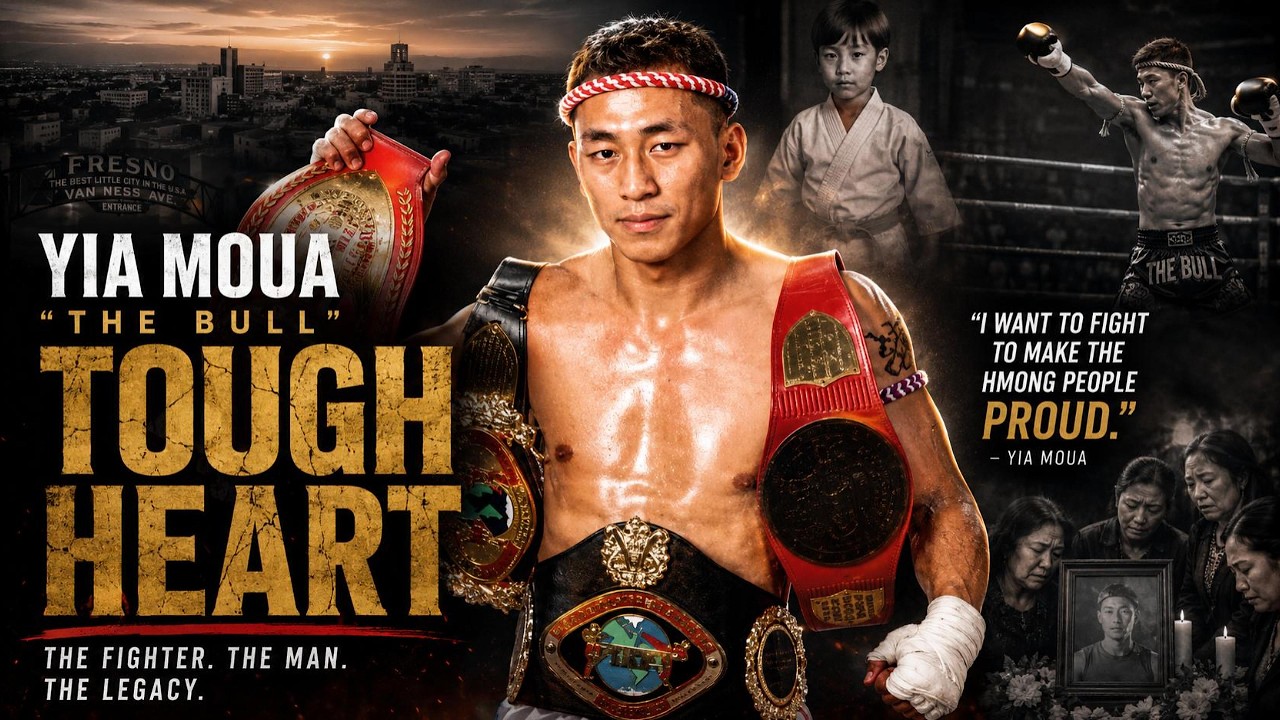
Yia "The Bull" Mua was a pioneering, Laotian-born Hmong-American professional Muay Thai kickboxer and community leader who achieved prominence in the martial arts world during the 1990s and 2000s. Known for his fearless, aggressive fighting style inside the ring, Mua amassed an impressive professional record of 32 wins and only 2 losses, securing five championship titles throughout his career. Beyond his athletic prowess, he was a deeply respected figure who split his impact across major Hmong hubs like Fresno, California, and Minnesota, using his platform to challenge, inspire, and empower his people.
Throughout his career, Mua made several defining contributions to the Hmong community:
- Breaking Boundaries in Professional Sports: As one of the first Hmong-American fighters to achieve national recognition and win multiple championship titles, he shattered glass ceilings in martial arts. He opened doors for future generations of Hmong athletes, showing them a viable path into professional sports.
- Challenging Negative Cultural Stigmas: Emerging during an era in the early 1990s when young Hmong men frequently faced negative societal stereotypes and systemic adversity, Mua actively fought against these narratives. His discipline and high-profile success offered a powerful, positive alternative image of Hmong youth.
- Empowering the Community Through Leadership: Mua deliberately used his platform as a trailblazer to uplift others, later channeling his skills into professional financial advising to help community members build economic security. His ultimate goal was to leave a lasting legacy that instilled deep pride in Hmong history and identity.
The end of Mua's fighting career came prematurely due to worsening health struggles, forcing his retirement from the ring. On January 15, 2010, his life was tragically cut short when he passed away at the young age of 34 after a severe battle with liver cancer. His untimely death was deeply mourned across the global Hmong diaspora, but he left behind a highly celebrated legacy as a cultural hero, a devoted family man, and a legendary pioneer who proved what Hmong individuals could accomplish on a national stage.


